




Technology in Public Safety
Public Safety Technology: Current Trends and Future Outlook
10-Min Read
An Overview of Emerging Public Safety Technologies
Public-safety technology is rapidly evolving across computer-aided dispatch (CAD)/records management systems (RMS), call-handling systems, and unmanned aerial vehicles. CAD/RMS platforms increasingly emphasize integration, cloud migration, and mobility, enabling seamless data sharing and field access via native mobile applications. Cloud-based call-handling equipment (CHE) solutions offer scalability and resilience but still are immature, suffer from latency issues, and require robust, redundant connectivity. Drone use is expanding significantly, especially through Drones as First Responder (DFR) programs, which provide situational awareness and reduce unnecessary responses. Recent Federal Aviation Administration (FAA) reforms have streamlined the drone waiver process, dramatically accelerating nationwide adoption. However, it is prudent that agencies develop sound policies before they are deployed.
What Are the Latest Innovations in Computer-Aided Dispatch and Records Management Systems?
Three shifts are dominating the CAD/RMS space: integration, migration to the cloud, and mobility.
Integration and Interoperability
CAD and RMS systems often have been delivered as integrated suites, with vendors emphasizing seamless data-sharing across platforms. Correspondingly, integration with other systems can be as important to meet ever-expanding operational needs, especially aggregated data feeds into CAD systems.
Today, telecommunicators must navigate multiple screens — e.g., sensor data, alarms, video, IoT1 feeds — each siloed and difficult to interpret quickly. The envisioned solution is a backend CAD-embedded aggregation platform that ingests and standardizes data, automatically parsing and presenting only the relevant elements to telecommunicators.
However, though technically feasible, adoption depends heavily on industry-wide data standards and CAD vendors agreeing to support interoperability. Some legacy CAD platforms may require full replacement to enable this capability, whereas newer platforms built on modern software architectures more readily can accommodate standards-based integration. These challenges might be offset somewhat by the ability to leverage AI to digitize millions of records, not merely scanning them but to extract, cleanse, and structure data. Several pilot projects are underway to test the concept.
Cloud Migration Supports Redundancy, Cybersecurity, Scalability and More
Meanwhile, large CAD system vendors are adopting cloud-hosted architectures, following a path previously established by RMS vendors. Cybersecurity is a key driver behind the move to the cloud. Public-safety agencies generally recognize that their internal IT teams cannot keep pace with thwarting security threats or match the security investments made by major cloud providers such as Amazon Web Services and Microsoft Azure. High-profile cyberattacks against public-safety agencies have reinforced this mindset.
Other cloud advantages include scalability, improved disaster recovery, and geo-redundancy, with mirrored data centers making fail-over across regions possible. However, resilient, redundant connectivity is vital when leveraging cloud-hosted systems, i.e., agencies must maintain redundant network paths via multiple commercial carriers, LTE2 providers, or satellite solutions such as Starlink. If they don’t, and a cloud provider suffers an outage — which occurred last year — platforms and over-the-top applications become inaccessible and operations are disrupted, which can be disastrous in the public safety sector, especially the 911 community.
A disadvantage is that cloud technology still is somewhat immature. Another concern regarding cloud-hosted CAD/RMS involves latency, which has improved somewhat but still does not always meet standards-based mission-critical performance levels. Other concerns include a perceived loss of control over data, fees to offload data from the cloud, and long-term subscription costs.
Mobility Improvements for Better In-Field Use
Beyond cloud migration, another major area of recent evolution is mobility. Agencies increasingly deploy smartphones, tablets, and other small-form-factor devices to emergency responders, enabling them to access CAD and RMS functions in the field. Native mobile apps — rather than browser-based interfaces — provide richer functionality and better performance for queries, mapping, and the bidirectional transfer of real-time operational data.
1 Internet of Things.
2 Long-Term Evolution.
How is Call-Handling Equipment Evolving in Public Safety?
The decline of user group meetings, once valuable for sharing knowledge and best practices, has further limited understanding of CHE capabilities. Consequently, many jurisdictions mistakenly believe that their CHE lacks certain features — often due to limited vendor engagement or insufficient training — and consider switching vendors unnecessarily.
A significant debate is underway concerning native CHE capabilities versus over-the-top applications. The latter tools offer substantial value but are challenging to integrate universally due to the diversity of CAD systems and application programming interfaces (APIs). Over-the-top tools also increase screen clutter and cognitive load for telecommunicators.
As with most aspects of the public-safety environment, artificial intelligence is an emerging opportunity, especially for call triage, translation, transcription, and identifying duplicate or repeat calls. Adoption is slow, however, due to concerns about reliability and fear of being early adopters.
Another major theme concerns the growing shift toward cloud-based CHE, driven by improved reliability, redundancy, scalability, and reduced responsibility for local infrastructure. However, cloud adoption is constrained in regions lacking reliable or diverse connectivity — particularly rural or mountainous areas. Agencies must ensure redundant network paths and understand cloud options and risks.
Looking ahead, four key trends to contemplate are AI integration, cloud migration, shared regional systems to reduce costs, and the ongoing need for agencies to stay current and informed to avoid misinformed or risky upgrade decisions.
How Are Unmanned Aerial Vehicles (Drones) Changing Emergency Response?
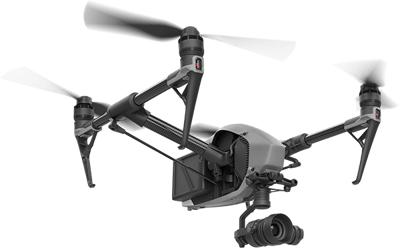
Drones are transforming emergency response, and more than 50 public-safety use cases have emerged. The fastest-growing trend is “Drones as First Responder” (DFR) — i.e., automated or semi-automated launches from rooftops that allow drones to arrive before law-enforcement personnel. In 25 percent of calls, drones have determined that no ground response is needed, returning units to service and saving thousands of staff hours.
Drones as First Responder: Use Cases
Two cases in Chula Vista, California, illustrate the life-saving results. In one, a 911 caller indicated that a man was waving a gun in a public area; however, a drone identified a lighter in the shape of a gun, deescalating the incident and likely preventing a fatal shooting.
In another, a drone located a burning vehicle on Interstate 5. Victims still were in the car and the video feed indicated that the fire was accelerating. Fire department apparatus was too far away, so the information was shared with the California Highway Patrol, which has jurisdiction over the state’s freeways; two nearby troopers pulled the victims out of the vehicle seconds before flashover.
Drones Deliver Emergency Supplies
One of the most interesting emerging use cases concerns using drones to deliver blood products to emergency scenes, a potentially life-saving capability for rural or hard-to-reach locations. Drones already are being used in wildfire fighting to deliver supplies and heavy equipment, preventing personnel from carrying these items long distances over heavy terrain. Blood is difficult to manage in field settings, so drone delivery offers the possibility of dramatically reducing time to transfusion. Pilot programs have demonstrated that long-range, controlled drone delivery is already feasible. The approach also enables interhospital sharing of scarce blood supplies during mass-casualty incidents, with drones parachuting or landing payloads safely at predetermined sites.
Streamlined Drone Waiver Process
Arguably, the most important development is the streamlining of the Federal Aviation Administration’s drone waiver process. Public-safety agencies needed special approvals to operate beyond visual line of sight (BVLOS) and to launch drones remotely from rooftops without a dedicated onsite observer. These waivers were extremely difficult and time-consuming to obtain, limiting adoption nationwide.
For six years, the FAA approved only 50 DFR waivers, averaging fewer than 10 per year. Each application required:
-
30–40 pages of technical documentation.
-
A visual observer stationed on rooftops during every drone flight.
-
Detailed analysis of proposed sensor technologies.
-
Complex safety cases addressing collision avoidance and airspace risks.
The lengthy documentation requirements and lack of standardized application procedures created massive delays and inconsistencies. Agencies often waited nearly 11 months for approval.
Over the past year, however, the FAA, influenced by advocacy from the Drone Responders Working Group, adopted a unified waiver template that includes only the essential safety attestations and operational details. The results are eye-opening — 600 waiver approvals in five months, with the average wait time dropping to less than a week.

Related Content
Evolution of GIS for Public Safety
AI and advancing technology are transforming GIS mapping for public safety, creating opportunities and challenges for ECCs.
Modernizing Emergency Management for Public Safety
The latest trends and opportunities for Emergency Management Agencies across the US to improve operations and outcomes.
Next Generation 911
How to address key challenges in achieving end-state Next Generation 911 (NG911) in ECCs of all sizes.